
Carter County Arrest Records
An arrest record is tied to the arrest, booking, custody, and law-enforcement side of the event. In Carter County, sheriff and jail sources are relevant for custody questions. The official county page lists Sheriff Jeff May at 300 West Main Street in Grayson and Jailer R. W. Boggs at the Carter County Detention Center. The detention center's public current-inmate list is the county roster path when the person is still in custody.
A court charge record is different. After an arrest, a prosecutor decides what formal charges to file. Those charges become part of the District Court or Circuit Court case record and may later be amended, reduced, dismissed, diverted, or resolved by plea or trial. Booking data points to custody; court charge records point to the case. The full case file and outcome are covered in Carter County criminal court records.
Find Arrest Records and Charges
For custody, start with the Carter County Detention Center current-inmate list or call the jail. For court charges after arrest, use KYeCourts public case access and the Carter County Circuit Court Clerk. If the arrest led to a misdemeanor, traffic offense, violation, or ordinance case, the matter is often in District Court. If it led to a felony, it may begin with District Court events and proceed to Circuit Court.
- Check the county jail roster or call the detention center for current custody.
- Open KYeCourts guest access for public case information.
- Search by case number, defendant name, birth date, driver's license number, or citation details.
- Open the case and review each charge, amendment, disposition, and docket entry.
- Ask the Circuit Court Clerk for certified copies or older-file details.
AOC criminal record reports can include original charge, amendments, disposition, charge date, disposition date, county of origin, and necessary memos, but Kentucky labels those reports as not official court records. Official Carter County court charge records remain with the local clerk.
Charges After Arrest
Carter County charges after arrest can enter court through different documents. A citation or complaint can start many District Court matters. An information or indictment may appear in felony practice. The document type affects how the case reaches court, but the key question for a records search is what charge was filed and what happened to it.
| Document | Filed By | Common Use | Record Meaning |
|---|---|---|---|
| Complaint | Officer or prosecutor | Misdemeanor, violation, preliminary criminal allegation | Alleges facts and starts or supports a court case. |
| Information | Prosecutor | Felony or negotiated criminal filings where allowed | States the formal charge without a grand-jury indictment. |
| Indictment | Grand jury | Felony prosecution | Shows a grand jury returned a formal felony charge. |
Carter Charging Offices
Kentucky does not use the title district attorney. Felony prosecutions are handled by Commonwealth's Attorneys by judicial circuit. The Kentucky Attorney General's directory lists the Commonwealth's Attorney for the 37th Circuit, covering Carter, Elliott, and Morgan Counties, as Brandon Ison. The Carter County Attorney prosecutes violations of criminal law within District Court jurisdiction.
The Kentucky Attorney General attorney directory identifies prosecution offices across the state.
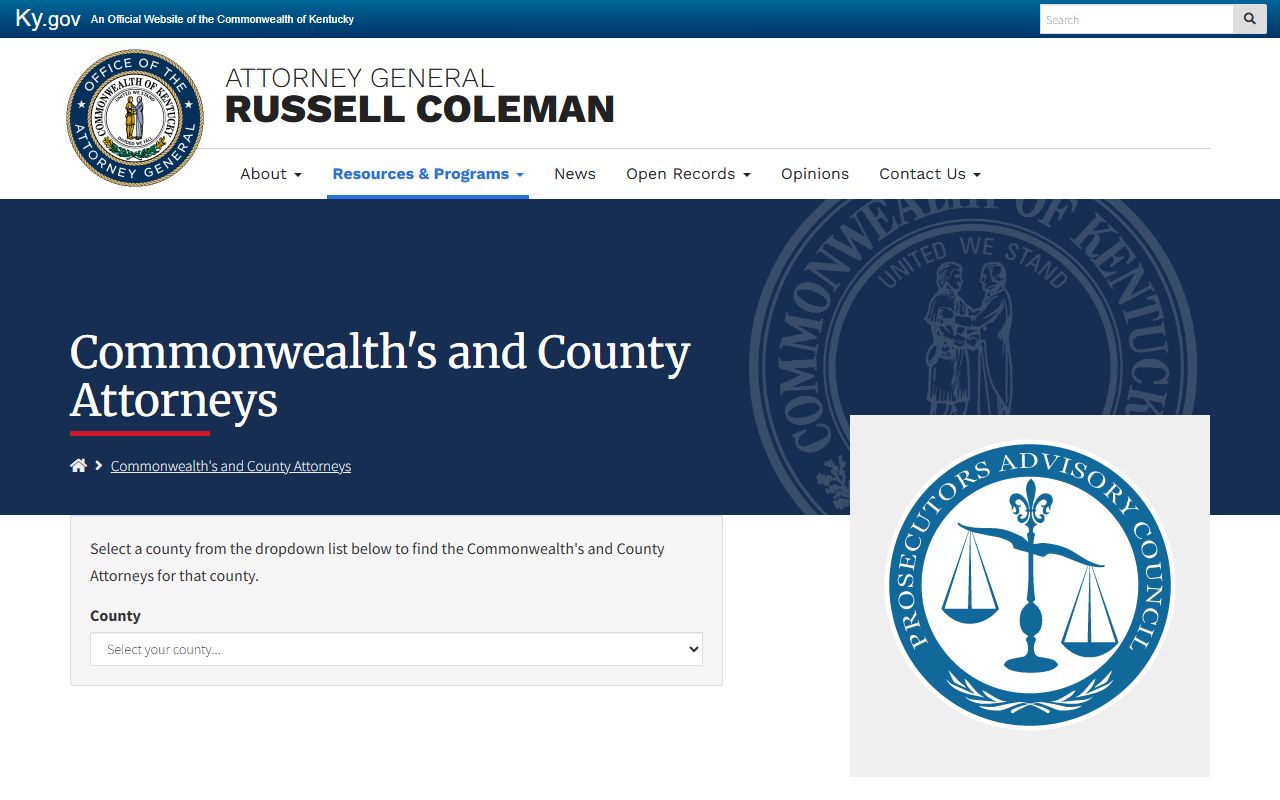
That office split helps explain why felony charge records and District Court charge records may involve different prosecutors.
Carter County Attorney
300 West Main Street
Grayson, KY 41143
606-474-5081
Monday-Friday, 8:00 a.m.-4:00 p.m.
37th Circuit Commonwealth's Attorney
104 Hunter Street, P.O. Box 128
Sandy Hook, KY 41171
606-738-5494
Carter Charge Status Terms
One arrest can lead to several charges, and each charge can take a different path. A person may have one charge dismissed, another amended, and another resolved by plea. That is why court charge records should be read by count, not just by case caption.
| Status | What It Means |
|---|---|
| Pending | The charge is open and no final disposition has been entered. |
| Amended | The charge was changed, corrected, or replaced by a different charge. |
| Reduced | The charge was lowered to a less serious offense or lesser degree. |
| Dismissed | The court record shows the charge was ended without conviction on that count. |
| Diversion | The case may be held under conditions, with possible dismissal if requirements are met. |
| Disposed | The charge has reached an outcome, such as plea, verdict, dismissal, or other final action. |
Charge vs Conviction
Being charged is not the same as being convicted. A Carter County court charge record can contain accusations that never become convictions. It may also show later amendments that change the offense level, charge wording, or final result.
| Feature | Charge | Conviction |
|---|---|---|
| Meaning | An accusation filed in court | A guilty plea, guilty verdict, or conviction entry |
| Timing | Early or pending case stage | After disposition or sentencing |
| Can Change | May be amended, reduced, dismissed, or diverted | May be appealed, vacated, or expunged if eligible |
| Search Risk | Can be mistaken for guilt if read alone | Must still be checked for later relief or expungement |
Codes and Severity Levels
Carter County criminal charge records can involve felony, misdemeanor, traffic, violation, and ordinance categories. Circuit Court handles capital offenses and felonies. District Court handles misdemeanors, traffic offenses, violations, city and county ordinances, and preliminary felony steps. Charge codes often track Kentucky statutes or local ordinance authority, but online summaries may not explain every element of an offense.
Read the charge name, degree or class, amended-charge field, and disposition together. If the charge record lists a statute, compare it to the current law only with care because statutes and penalties can change after the case date. For legal strategy, use counsel, not a public lookup result.
Restricted Charge Records
Kentucky public access is limited by confidentiality rules, court orders, and expungement law. Juvenile records are restricted in many situations. Adoption and termination matters, mental-health proceedings, sealed cases, protected addresses, medical details, Social Security numbers, and financial account data may be withheld or redacted. An expunged matter may be removed so official state-performed background checks do not show the record.
| Feature | Sealed | Expunged |
|---|---|---|
| Public Access | Hidden from ordinary public view | Removed or deleted from official systems after the order and fee rules are satisfied |
| Common Basis | Law, court order, juvenile status, privacy, or protected filing | Eligibility under Kentucky expungement statutes and court approval |
| Record Response | May require court order or party status | Agencies may respond that no record exists where the statute applies |
Important: A public charge lookup should not be used for FCRA-regulated employment, tenant, credit, or insurance screening.